November 26, 2026
How to Display Roses Safely Around Cats
By @bloomjournal43
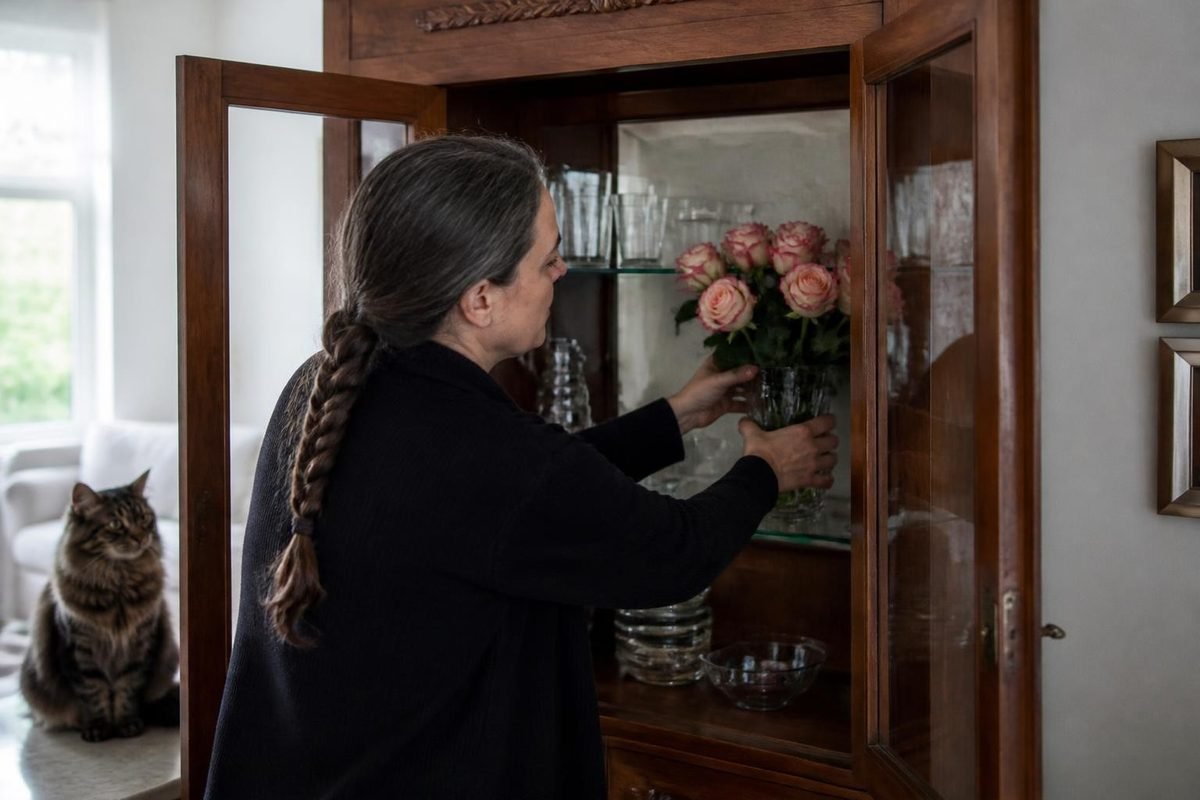
True roses are not considered toxic to cats, but their thorns, vase water, and other flowers in a bouquet can still pose risks. The safest display keeps the entire arrangement out of your cat’s reach and contains only flowers and materials you have checked.
Choose a secure location
Place roses inside a closed cabinet with glass doors, or in a room your cat cannot enter. A high shelf alone is not a reliable barrier: many cats can jump onto furniture or reach a vase from a nearby surface.
Check that the cabinet doors close securely and that the vase sits on a level, stable surface. If you use a separate room, make sure everyone in the home knows to keep the door closed. Move the roses before opening the room to your cat.
A sturdy vase with a broad base is less likely to tip than a tall, narrow one. Even so, keep it behind a barrier. Broken glass and spilled water can create hazards if a cat knocks an arrangement over.
Check every part of the bouquet
True roses, plants in the genus Rosa, are not toxic to cats. Do not assume that every flower with rose in its common name is a true rose. Identify unfamiliar plants before bringing them indoors.
Mixed bouquets need particular care. Lilies are especially dangerous to cats: contact with the flowers, leaves, pollen, or vase water can cause severe kidney injury. Keep lilies out of a home with cats, even if they are part of an arrangement you intend to place out of reach.
Remove thorns from stems carefully before arranging roses, and dispose of the trimmings where your cat cannot reach them. Thorns can scratch a cat’s mouth or paws. Wear gloves while handling thorny stems to protect your own hands.
Keep water and supplies covered
Vase water is not drinking water for your cat. It may contain flower food, plant debris, or residues from treatments applied to the flowers. Keep the vase inaccessible, and clean up spills promptly.
Store flower food packets, ribbon, wire, and discarded wrapping in a closed cupboard or bin. A cat can chew or swallow small pieces of packaging or loose ribbon. After arranging the roses, check the floor and work surface for scraps.
- Use a stable vase behind a closed barrier.
- Keep all stems, petals, and water out of reach.
- Check every flower and foliage stem in a mixed bouquet.
- Dispose of thorns and packaging securely.
Know when to call a vet
Even a nontoxic plant can upset a cat’s stomach if eaten. Contact your vet if your cat chews the arrangement and develops vomiting, drooling, or another concerning sign. Identify the plants involved if you can, and keep the packaging or take a clear photo to help your vet assess the exposure.
If your cat has had any contact with a lily or its vase water, contact a vet immediately rather than waiting for signs of illness. Do not try to make your cat vomit unless a vet tells you to do so.
A simple arrangement of checked roses behind a secure door lets you enjoy the flowers without giving your cat access to them.
Take a look at sending gifts to another country
❧